
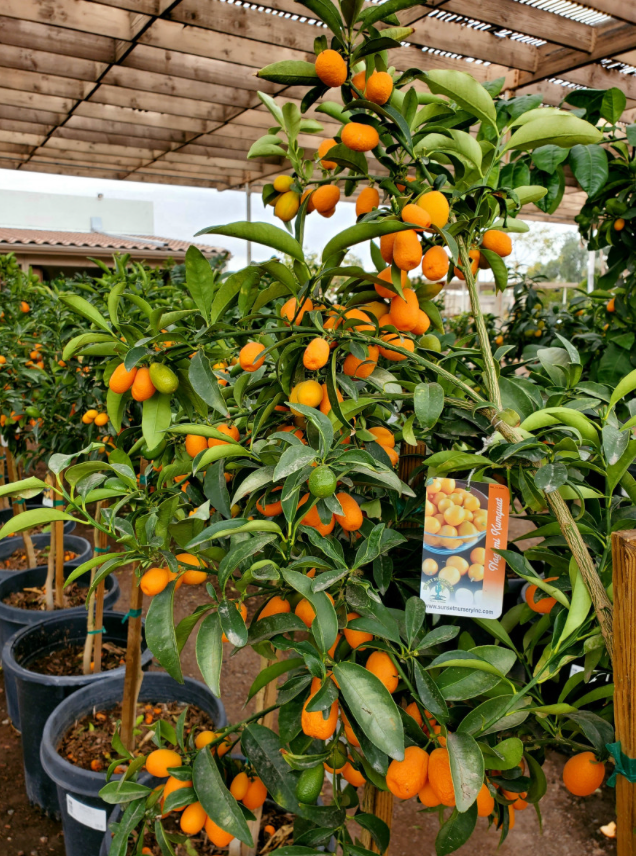

Nagami Kumquat Tree 15G
Couldn't load pickup availability
DETAILS AND CARE
Nagami Kumquat Tree – Fortunella margarita (15 Gallon Pot) available in Jupiter, FL.
Add zest and charm to your edible garden with the Nagami Kumquat Tree, a compact citrus favorite known for its small, tangy-sweet fruit and ornamental beauty. Grown in a 15-gallon pot, this tree is a fantastic choice for South Florida growers looking for a highly productive, low-maintenance citrus that thrives in tropical and subtropical climates.
A member of the Rutaceae family and Dicotyledonae class, Fortunella margarita is a cold-hardy, evergreen citrus variety that produces oblong, bright orange fruits with edible skin and a sweet-tart flavor profile. Its manageable size and dense foliage make it ideal for home orchards, patio containers, or foundation plantings.
Key Features:
-
Botanical Name: Fortunella margarita
-
Common Name: Nagami Kumquat Tree
-
Family: Rutaceae
-
Class: Dicotyledonae
-
Pot Size: 15 Gallon
-
Mature Height: 8–12 feet (easily pruned to size)
-
Spread: 6–10 feet
-
USDA Zones: 9–11 (excellent for South Florida)
-
Fruit Size: Small (1–2 inches), oval
-
Fruit Season: Late fall through winter
-
Fruit Flavor: Tart pulp, sweet skin; eaten whole
Sunlight Needs:
Thrives in full sun. Provide at least 6–8 hours of direct sunlight daily for best flowering and fruit production. In South Florida, full exposure encourages strong growth and dense foliage.
Watering:
Water deeply once or twice per week during dry spells. Ensure soil dries slightly between waterings to prevent root rot. Consistent watering during flowering and fruiting stages enhances yield and fruit quality.
Soil Requirements:
Prefers well-drained sandy or loamy soils with a slightly acidic to neutral pH (5.5–7.0). In South Florida, amend native soils with compost to increase water retention and fertility. Avoid planting in low-lying areas with poor drainage.
Fertilization:
Feed with a citrus-specific fertilizer every 6–8 weeks during the growing season (spring through fall). Include micronutrients such as magnesium, zinc, and iron to support lush growth and citrus health. Apply mulch around the base to retain moisture and suppress weeds.
Pest & Disease Tips:
Relatively pest-resistant but monitor for citrus leaf miner, aphids, and scale insects. Use neem oil or insecticidal soap as needed. Ensure proper air circulation to avoid fungal issues in humid weather.
Maintenance & Pruning:
Minimal pruning required—shape after fruiting or to maintain size. Remove dead or crossing branches. Can be grown as a standard tree or kept smaller for container cultivation.
Special Notes for South Florida Gardeners:
-
One of the most cold-tolerant citrus varieties, making it ideal for northern Palm Beach County and beyond.
-
Fruit is eaten whole—peel and all—making it a fun and flavorful addition to edible landscapes.
-
Pairs well with other compact citrus like calamondin, limequat, or dwarf Meyer lemon.
-
Highly attractive to pollinators, and fruit holds beautifully on the tree for extended harvest.
Jupiter Farms & Nursery

What People Are Saying
Interior Plant Stylization
The Poppy crew will meet you in your home or in the shop to offer recommendations
Show us how you
#PoppyScapeYourSpace!